
Beginner Bird Watching Guide by Another Summit
What do you picture when you imagine a “birder”? Maybe a person in a wide-brimmed hat carrying field guides and notebooks with a large pair of binoculars (or “bins” in birding vernacular) draped around their neck.
If you know a serious birder, you may know someone who is obsessed with keeping a catalog of species they have seen (known as “a life list”) and who will go to great lengths to see a new species of bird. For some people, birding is an identity, but to many more it is simply a way to slow down and enjoy the finer details of the natural world.
A birder is simply a person who observes or identifies wild birds in their habitats. Beyond that, exactly how to be a birder is up to you!
Most of us don’t spend much time really noticing what’s around us. We move quickly, stay in our heads, and miss the small details. Birding offers a different pace — one that invites you to pause, observe, and pay attention to the world and the animals that we might otherwise overlook.
The good news is that you don’t have to go far to start birding. You can do it from your porch, a parking lot, or a short walk around the block. The only requirement is paying attention.
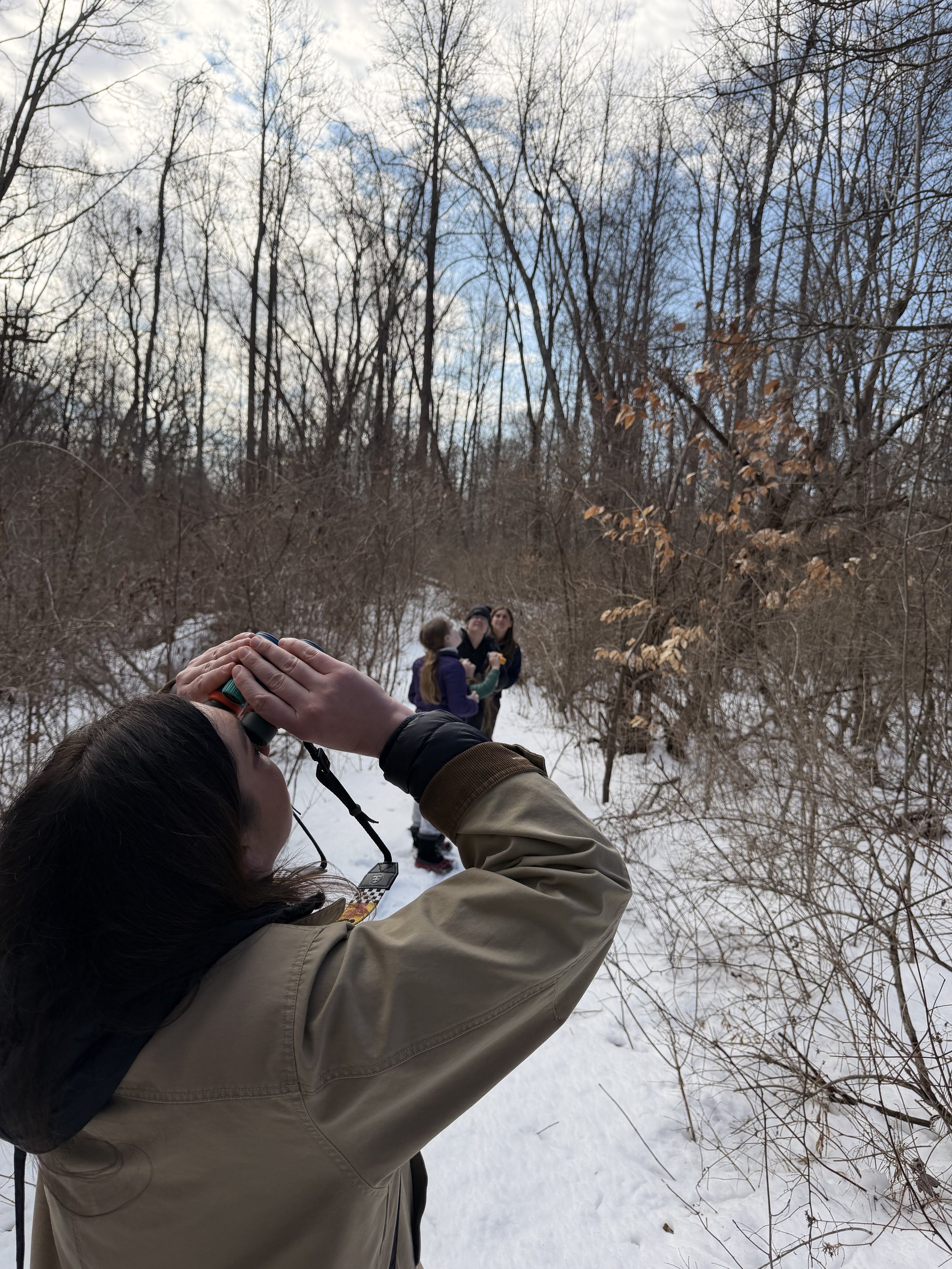
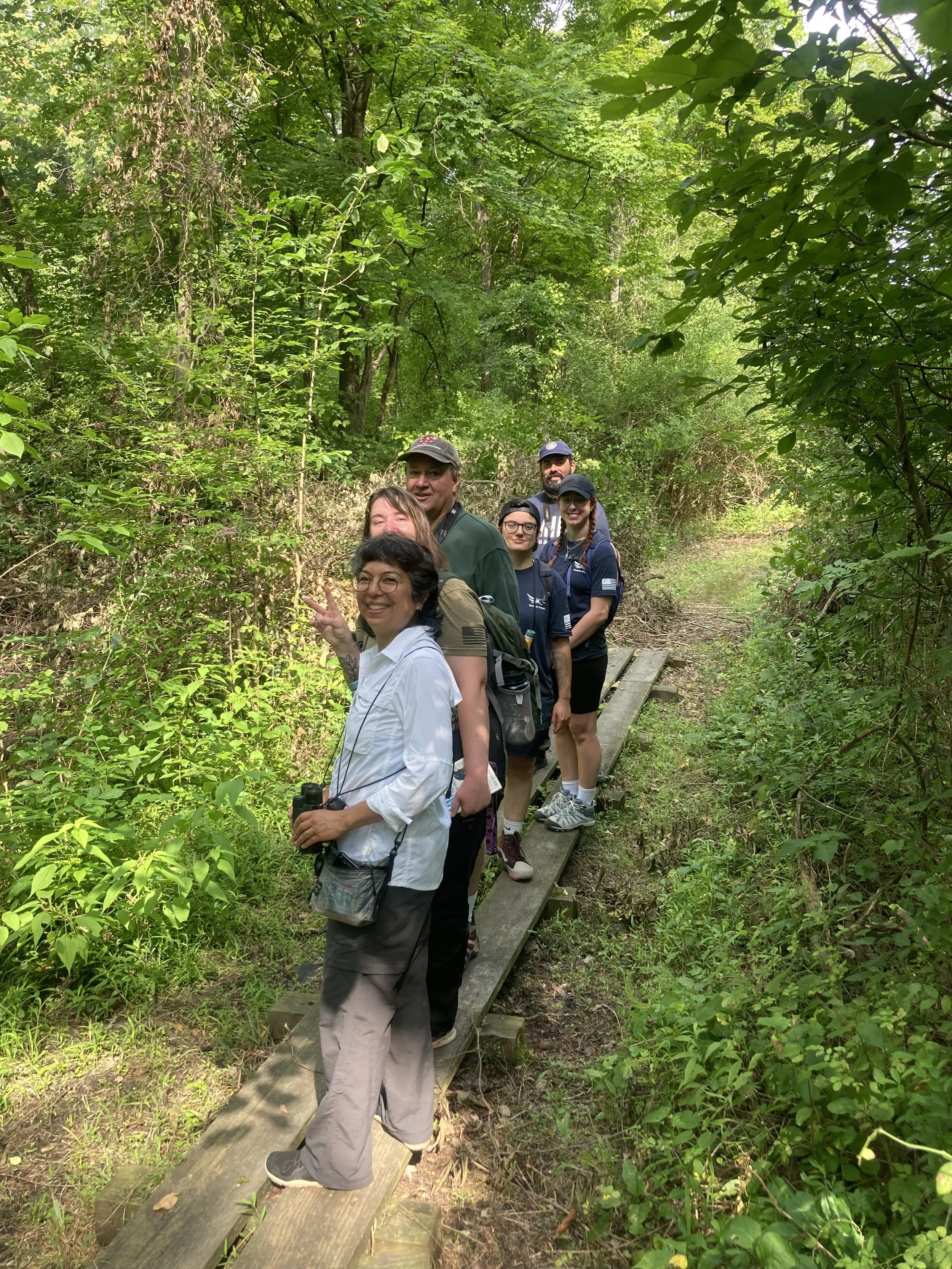
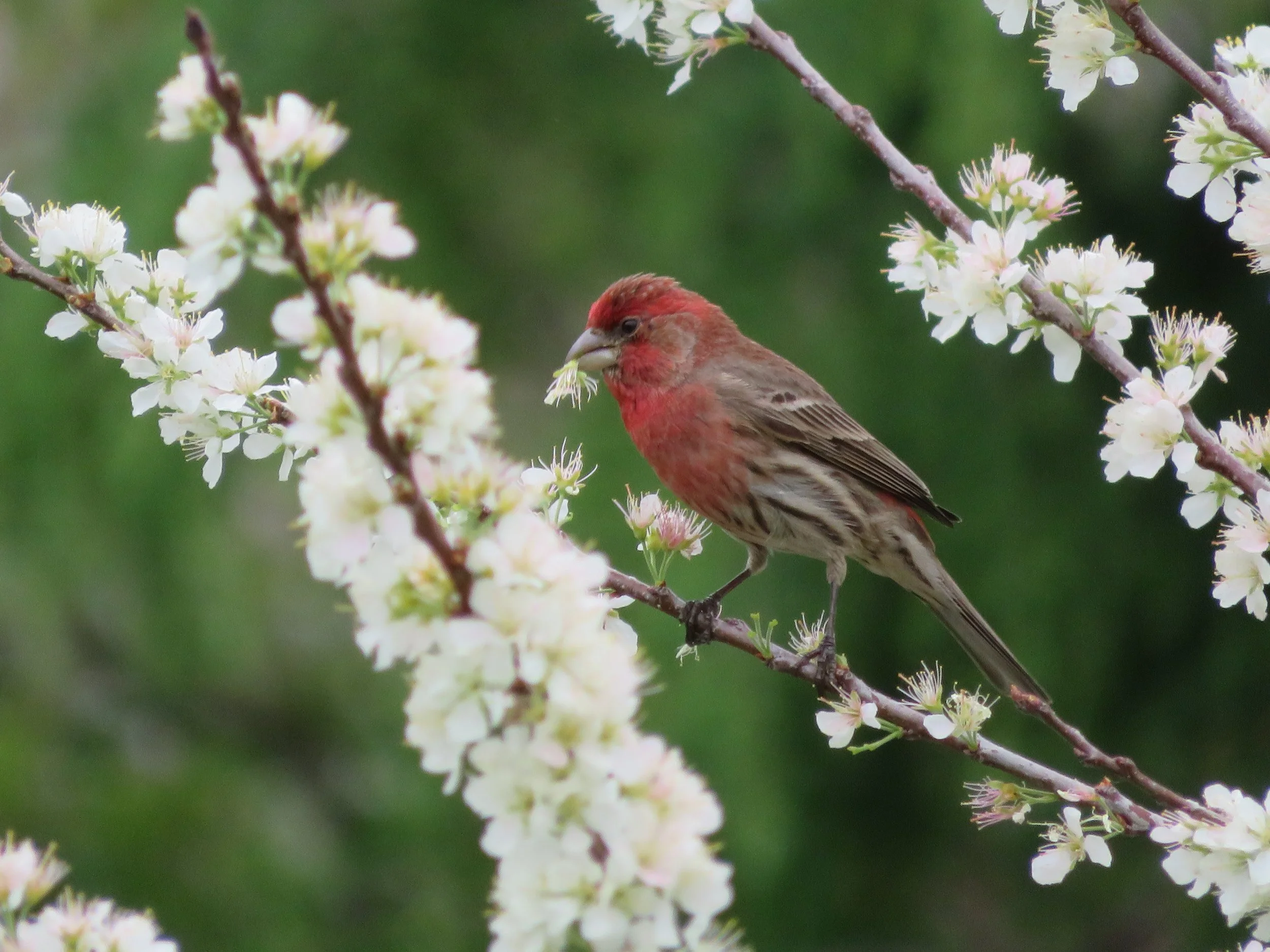
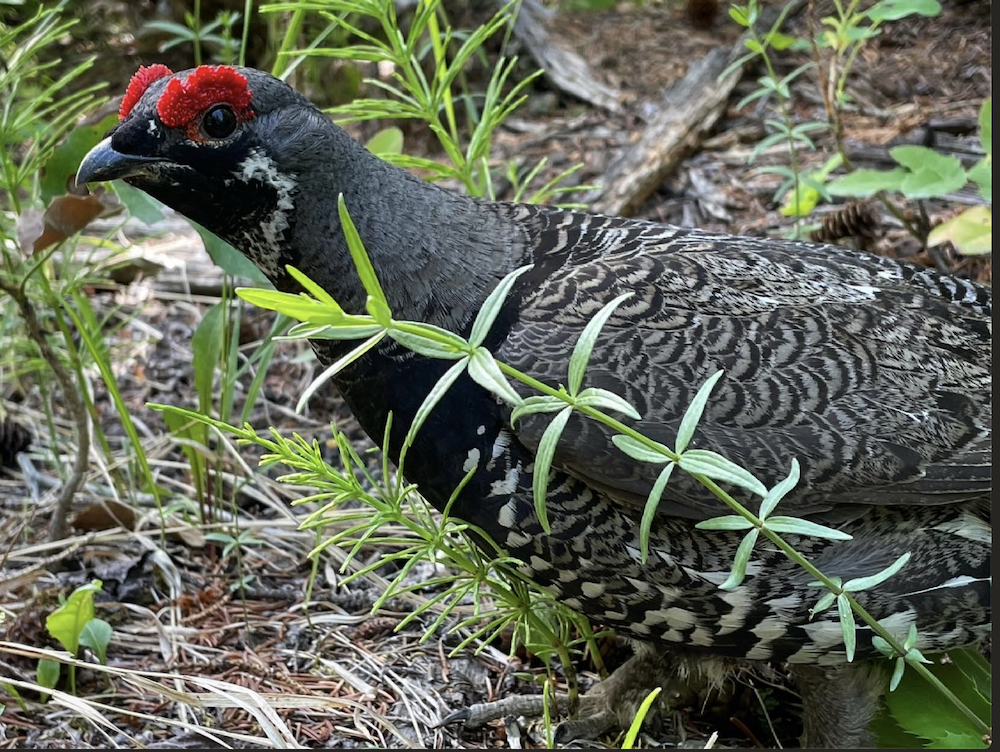
Our Another Summit outdoor program Executive Director Henri de la Vega has shared some tips for beginner birders (including basic gear and guides), along with photos taken on a few of our Another Summit outings, both on our birding-focused nature walks and other adventures where birds have been spotted!
Meet Henri
Best Binoculars for Beginners
Bird Identification Tools for Beginners (Apps & Guides)
Hudson Valley Birding: Name that New York Bird
Free downloadable Birding Bingo sheet
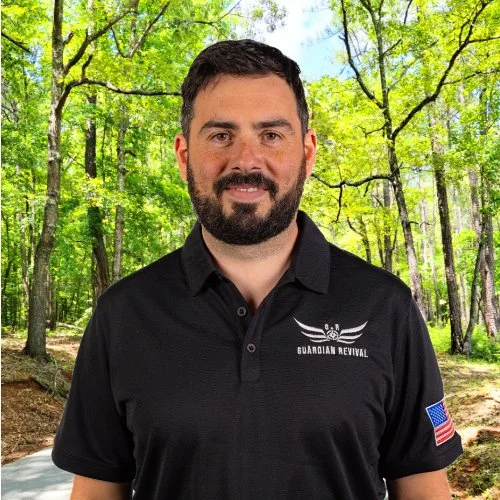
Hello, I’m Henri from Another Summit
For me, birding is the perfect complement to any time spent outside. Whether you are hiking, fishing, walking the dog, crossing through a parking lot or sitting on your porch birds are everywhere and all you need to do to start birding is take a moment to notice them.
“Spark bird”
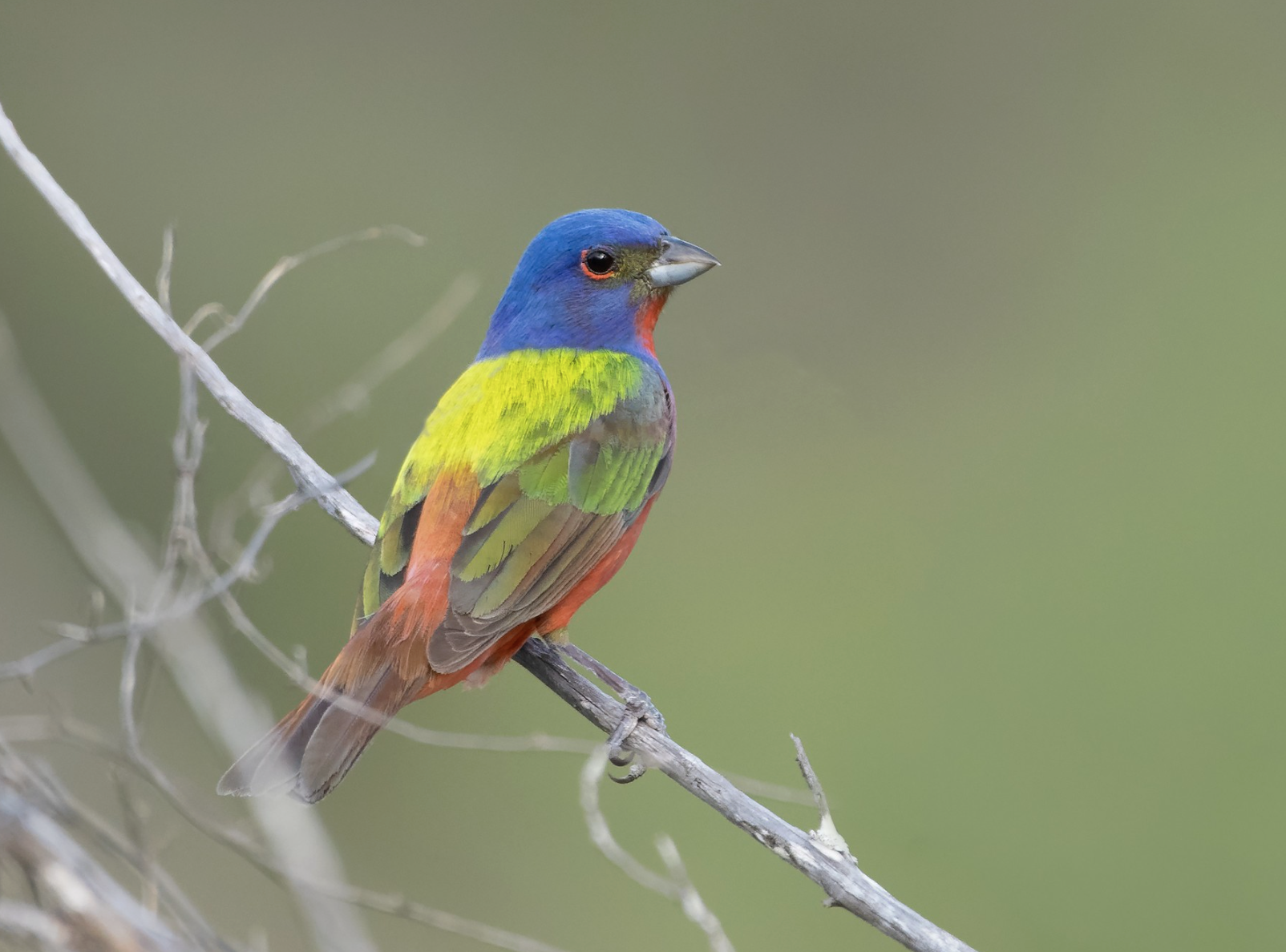
My journey into birding started back when I worked in parks. I had returned from holiday break to find that my 3.5 acre section of park had become home to an avian celebrity: a painted bunting. This bird was considered a pioneer, while native to the US it was far, far away from its home range. I was made aware of this event by the 30-40 people walking around my “zone” with big fancy cameras and binoculars.
Over the course of the next month, I learned many habits of this little bird: it ate seeds from the grasses in the morning and late afternoon, hid in the ilex mid day, and tended to hang out in the sunny areas on cold days. Dozens of people would visit my zone on a daily basis to try to catch a glimpse of this bird, and I could usually tell people where to find it.
I had seen thousands of birds in my years working at that park and did have a novice level interest in birds but the little painted bunting was the one that sparked my love for birding. Now I go out of my way to research areas I travel to with hopes to find new (to me) species.
Life List
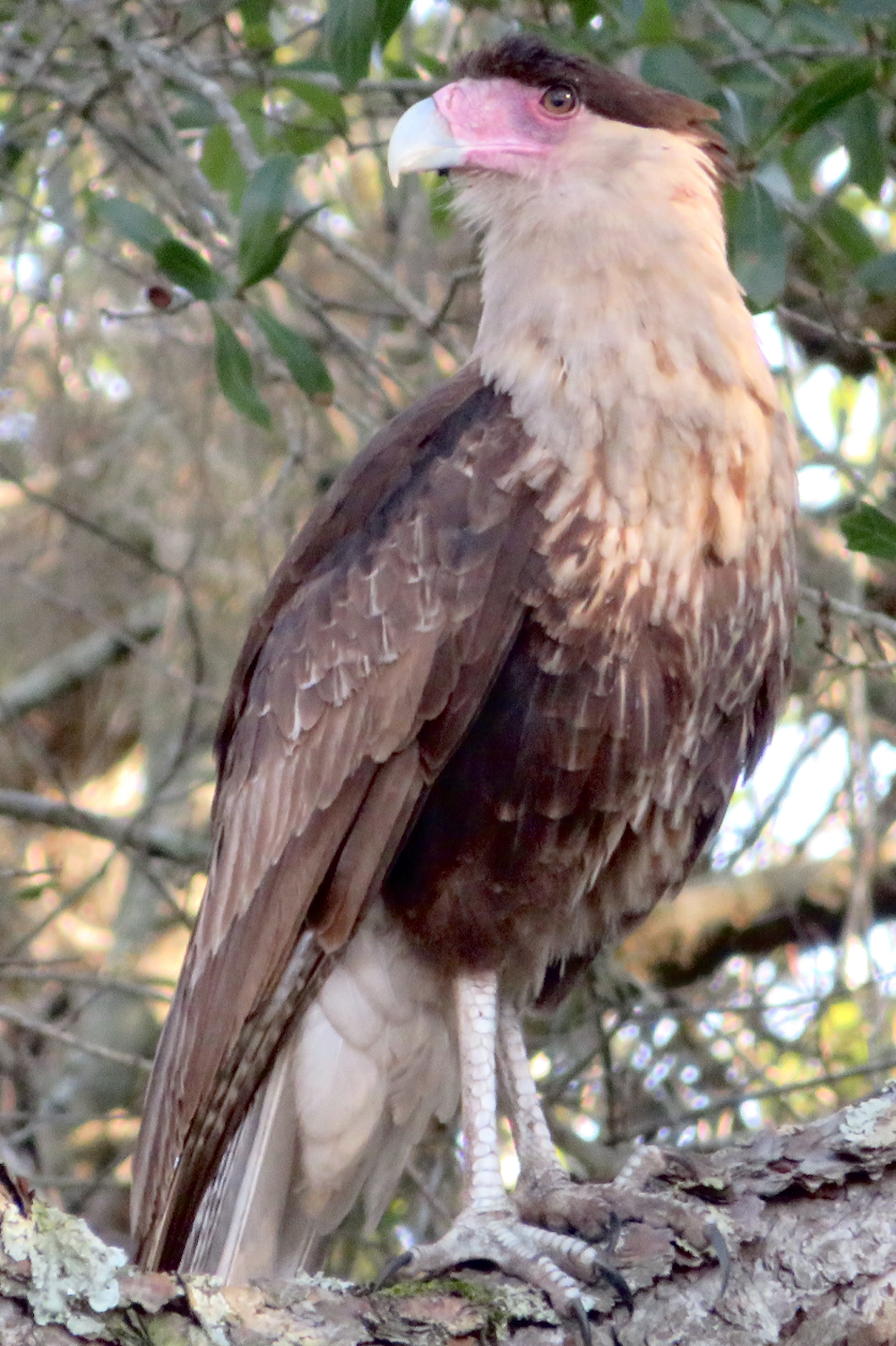
One of my most exciting birds: a Crested Caracara found on a prairie in southern Florida. These birds are native to Mexico/South America but are sometimes found in southern Florida and Texas. They are falcons that have a love of eating charred carrion after prairie fires.
How to Start Birding
It may feel overwhelming to get started once you realize that there are more than 1,000 species of birds in North America, not to mention the endless options for field guides and dozens of binoculars on the market. But don’t worry! We have some simple tips to help you get started with birding.
Best Binoculars for Beginners
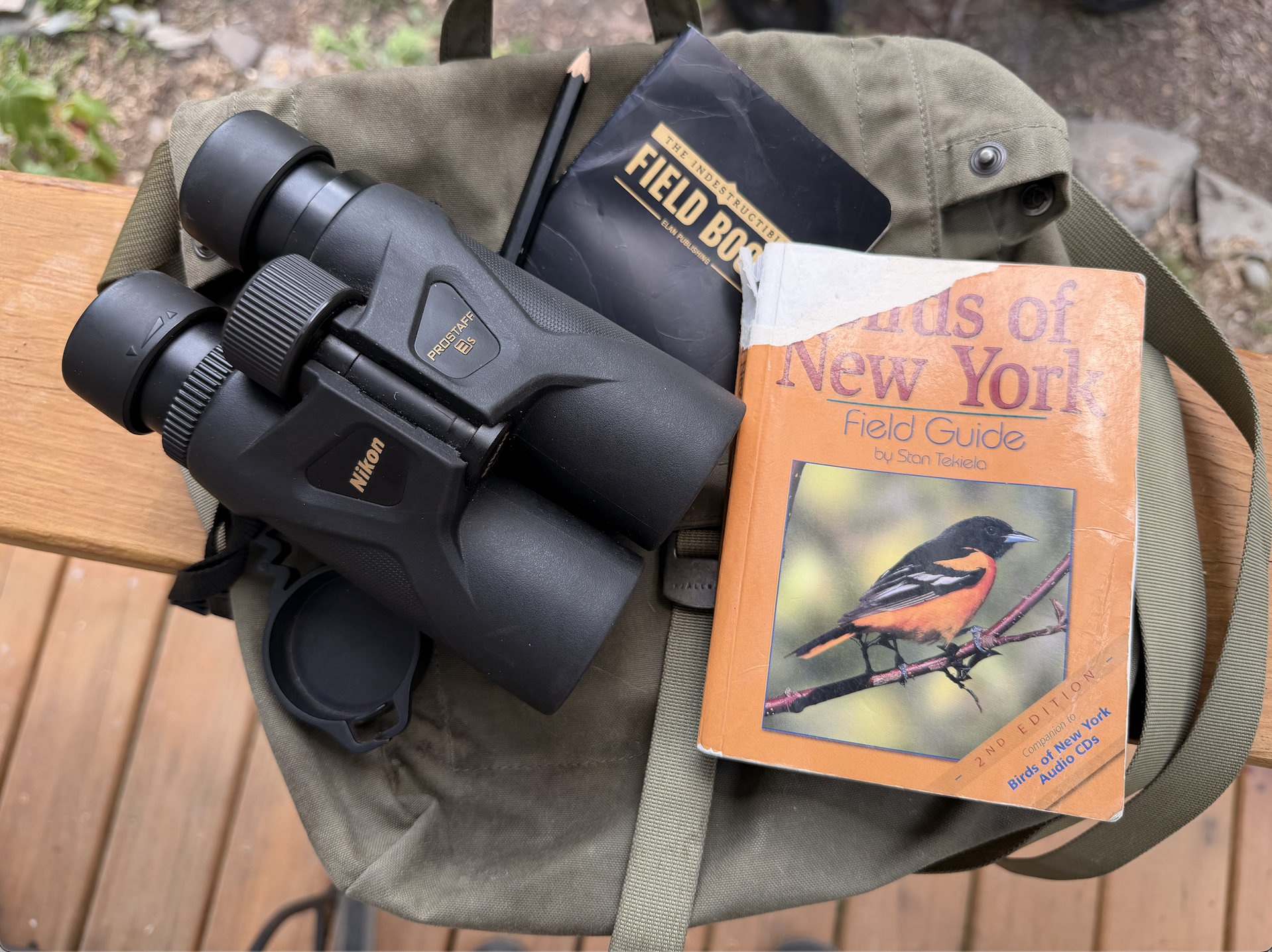
Henri’s backpack, “bins”, field guide, notebook, and pencil
TL;DR: Buy 8x32 or 8x42 (you’re welcome)
I generally try to avoid suggesting that any one piece of equipment is a necessity to someone just starting out in a new hobby, but with birding you really do want to start off with a decent pair of binoculars (aka “bins” in birding lingo). Why? If you want to observe birds doing bird things, you need to keep your distance — if you get too close, they’ll fly away.
If you already own a pair of binoculars, those are the best ones to start with. Before buying a pair, check with your local library to see if they have any you can borrow.
Libraries have so many things besides books and media available, so now is a great time to see what all they offer. I called my three closest libraries, 2 of them (Howland Public and Desmond-Fish libraries) both loan out themed birding/hiking backpacks with everything you need and the smaller library (Butterfield) had binoculars and guide books available for locals to borrow.
Dutchess Land Conservancy: Nature Exploration Backpacks at various local libraries
Howland (Beacon): Birding Backpack
Blodgett (Fishkill): Library of Things includes Kit #3 Bird Watching
Butterfield (Cold Spring): Library of Thingshas binoculars and guide books
If you are buying new, there are two things (without going deep in the weeds) you’ll want to look for in a new pair: optics and weight.
Optics
Did I mention that we could go deep in the weeds on this subject? Optics and lenses can be a complicated subject and if you like that sort of thing I suggest you explore this resource from the Audubon Society. For the sake of this article we’ll keep it short and sweet.
There are two sets of lenses on a pair of bins, the small ones that go against your eyes and the big ones on the other side of the tube. These lenses are assigned numbers like 8x42.
The big number refers to the larger lenses
These are the ones capturing light from the surrounding environment.
The more light you get, the clearer your image will be.
Usually 32 or 42 are preferred. This will give you lots of light without a lot of weight.
The small number refers to the “zoom”
The bigger the number, the closer the image will appear through the lens.
The intuitive thought is that you’d want as much zoom as possible; however, this is generally incorrect. The more zoom you have, the less field of vision you will see — meaning it’ll be harder to spot and track moving birds and your image will often appear shaky.
Of course, this is also dependent on where you watch. If you are on open plains/shores looking very far away, you will want more zoom, but if you are in the woods where you cant see past 40 feet due to trees and brush, you will want less.
My favorite pair of binoculars are the 8x42: they are lightweight, have good zoom, and let in lots of light. If you are looking for a brand check, out Nocs or Nikon for good starter bins.
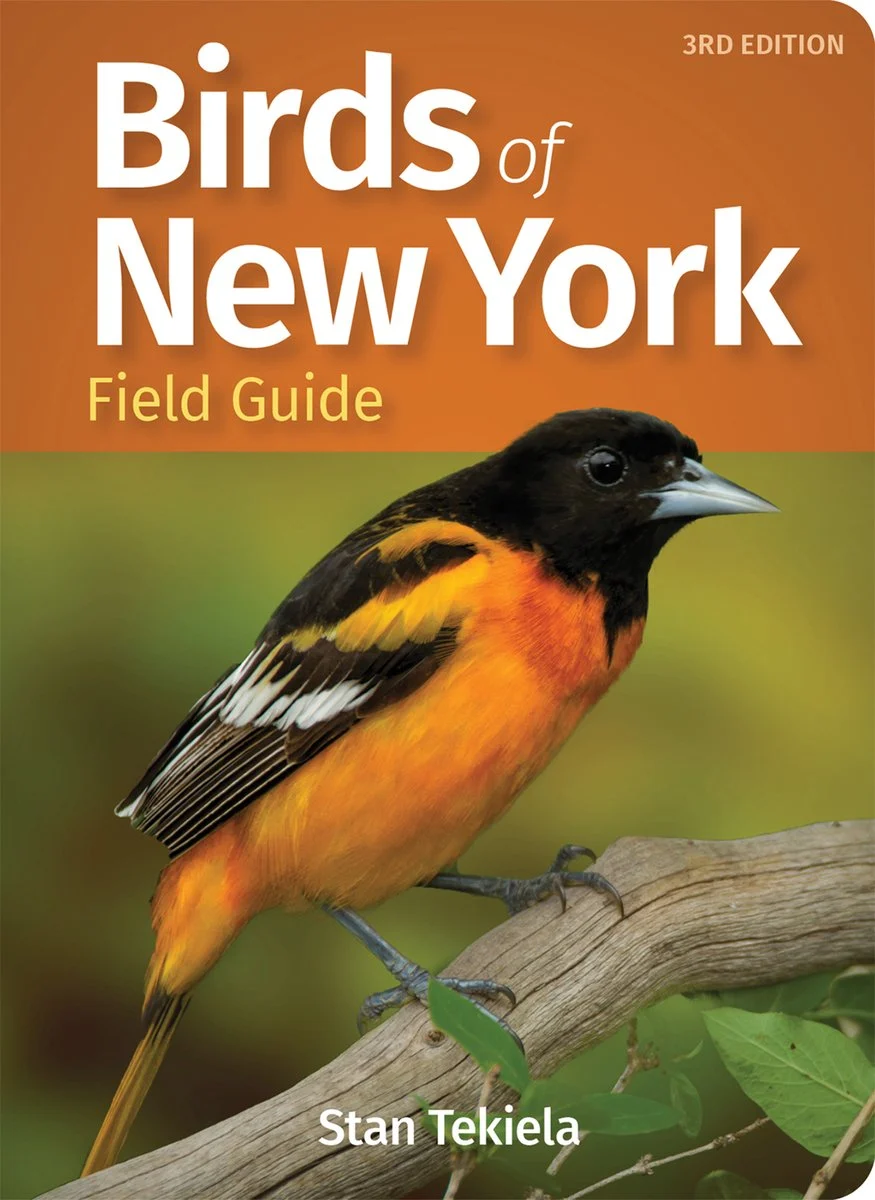
See Henri’s well-worn copy above
Bird Identification Tools for Beginners (Apps & Guides)
There are countless bird identification guides with thousands of birds. Do yourself a favor and find an ID guide that is specific to your region as possible.
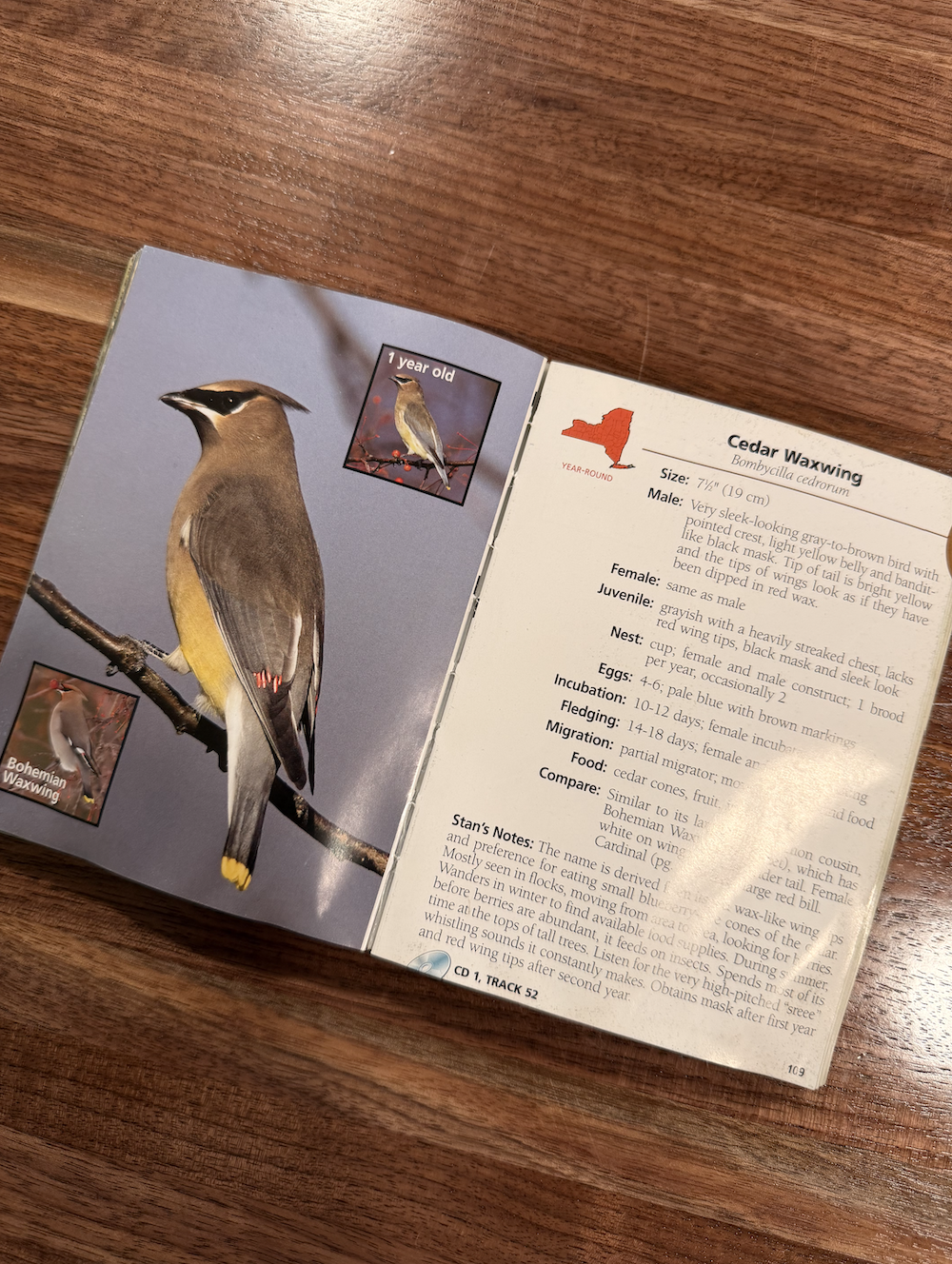
My favorite ID guide and the only one I carry locally is Stan Tekiela's Birds of New York Field Guide. It narrows identification down to 126 spices and arranges them by color for ease of field identification. Stan Tekiela has made a guide to nearly every state. ID guides are another resource that may be available at your local library.
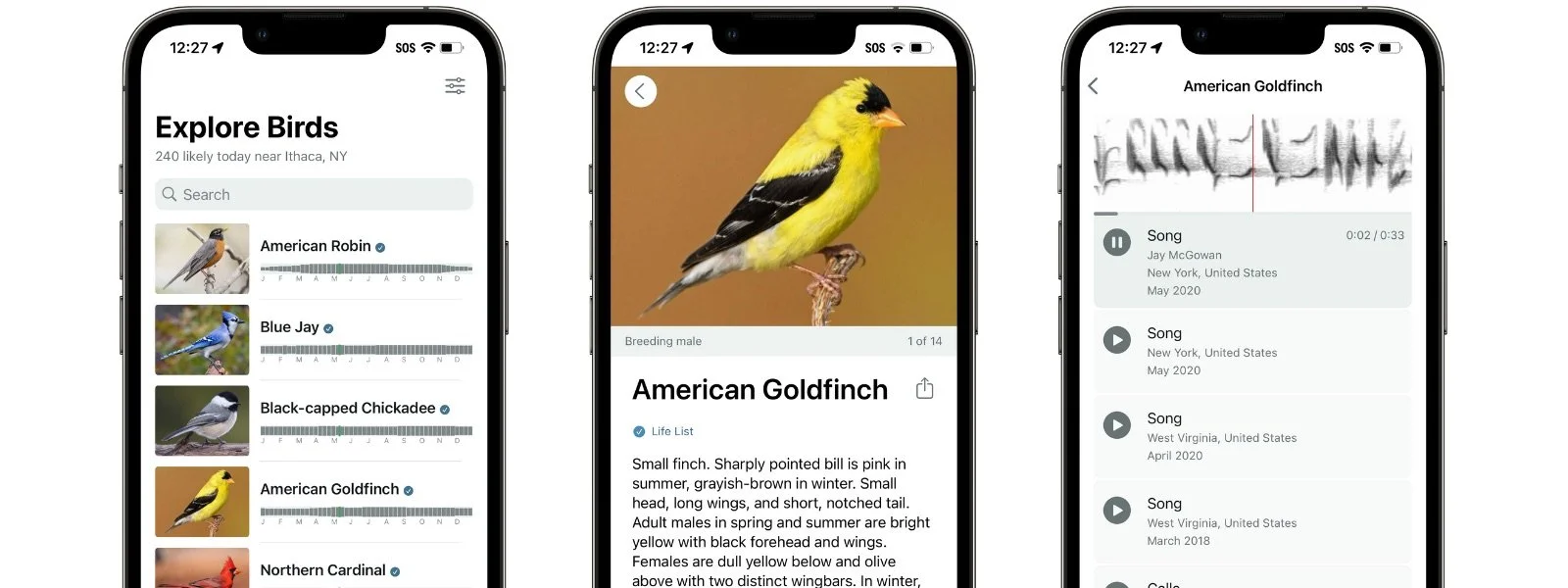
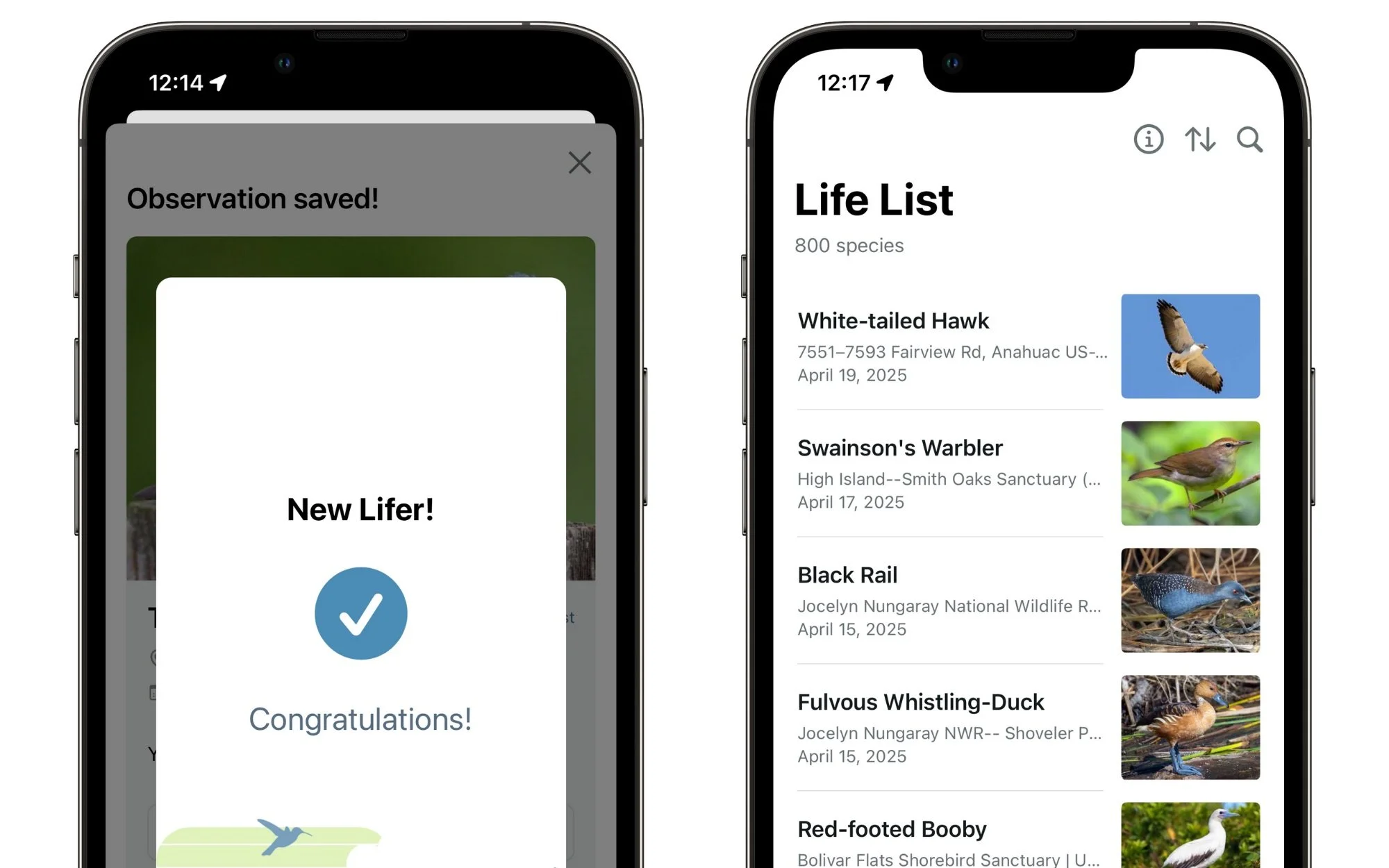
One of my favorite resources is the Merlin Bird ID app, which was created by the Cornell Lab of Ornithology. Add this clever guide to your phone for step-by-step identification, photo upload, and sound ID. The sound ID function is a popular way to discover birds in your area by their calls alone.
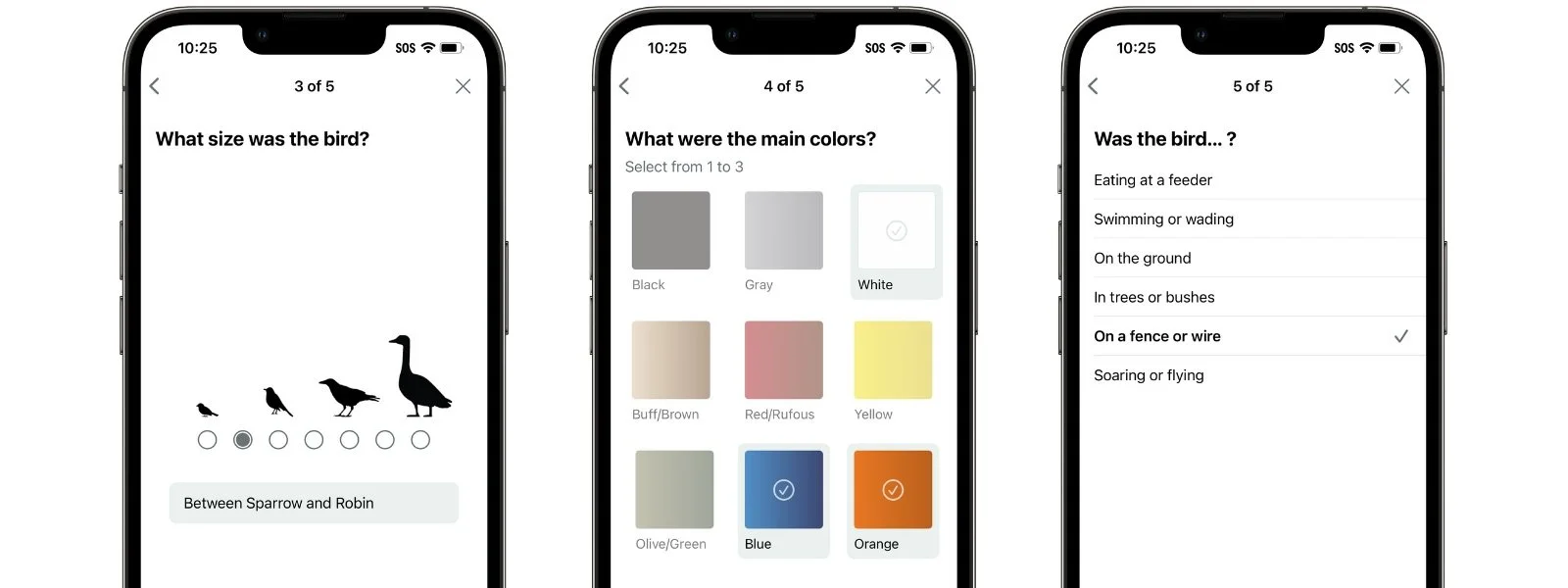
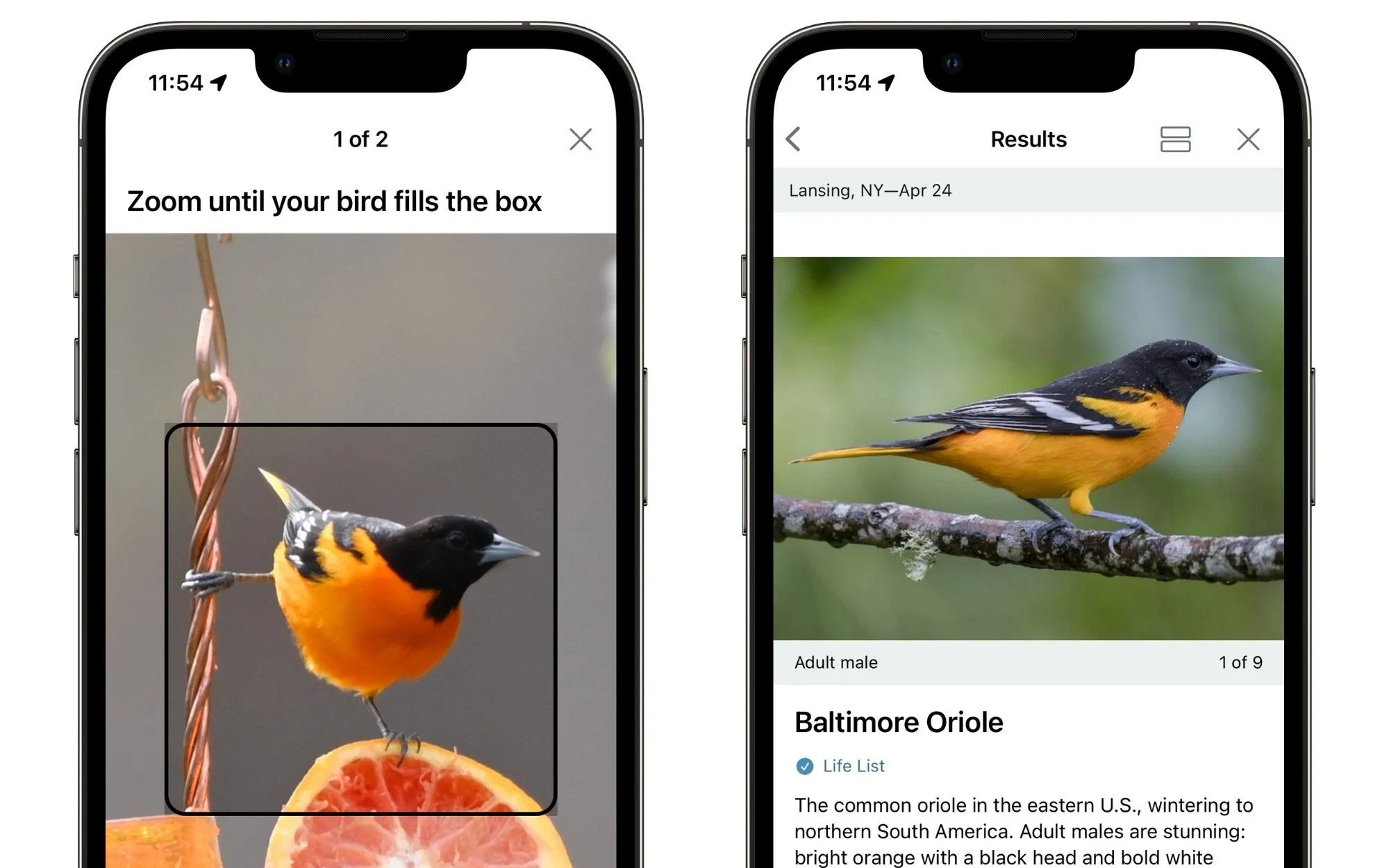
Birding Tips for Beginners
Take advantage of the light. If it’s a sunny day, focus your attention to areas opposite of where the sun is. Think of it like taking a photo, if the sun is behind your subject, they will appear dark and without detail. Same goes for birding with binoculars, you’ll have a much easier time making out detail if the sun is shining on the bird.
Tread lightly. Keep voices down, wear drab (dark, not bright) colors, and move slowly. Most birds are prey animals and scare easily. Pretend you are hunting, and you will see more birds!
Forget about identification in the field. Do yourself a favor and remove a little pressure from your new hobby: you’ll learn the birds in time. When you are just getting started, simply go outside, find a bird, and try to figure out what it’s doing. Is it hunting? Socializing? Cleaning itself? Building a nest? Eating a squirrel?!
Take notes. What do you do when you see a bird you don’t know? Write a note about it to help describe and define some details and help clarify your observations: “Today I saw a big brown and white bird up in a tree at the local park, maybe some kind of hawk. It thought it was cleaning its feet but then it lifted its head and was holding half a dead squirrel in its beak. Yeah, must have been a bird of prey.”
Don’t forget about identification! Wait, didn’t you just say not to worry about this… Identifying (ID) is part of the fun! If you are going to take time to get to know a bird in the field, learn its name. Use your notes or pictures and try to figure out what you were looking at. If the birds are making noise, use the Merlin App’s Sound ID to try to figure out what they are.
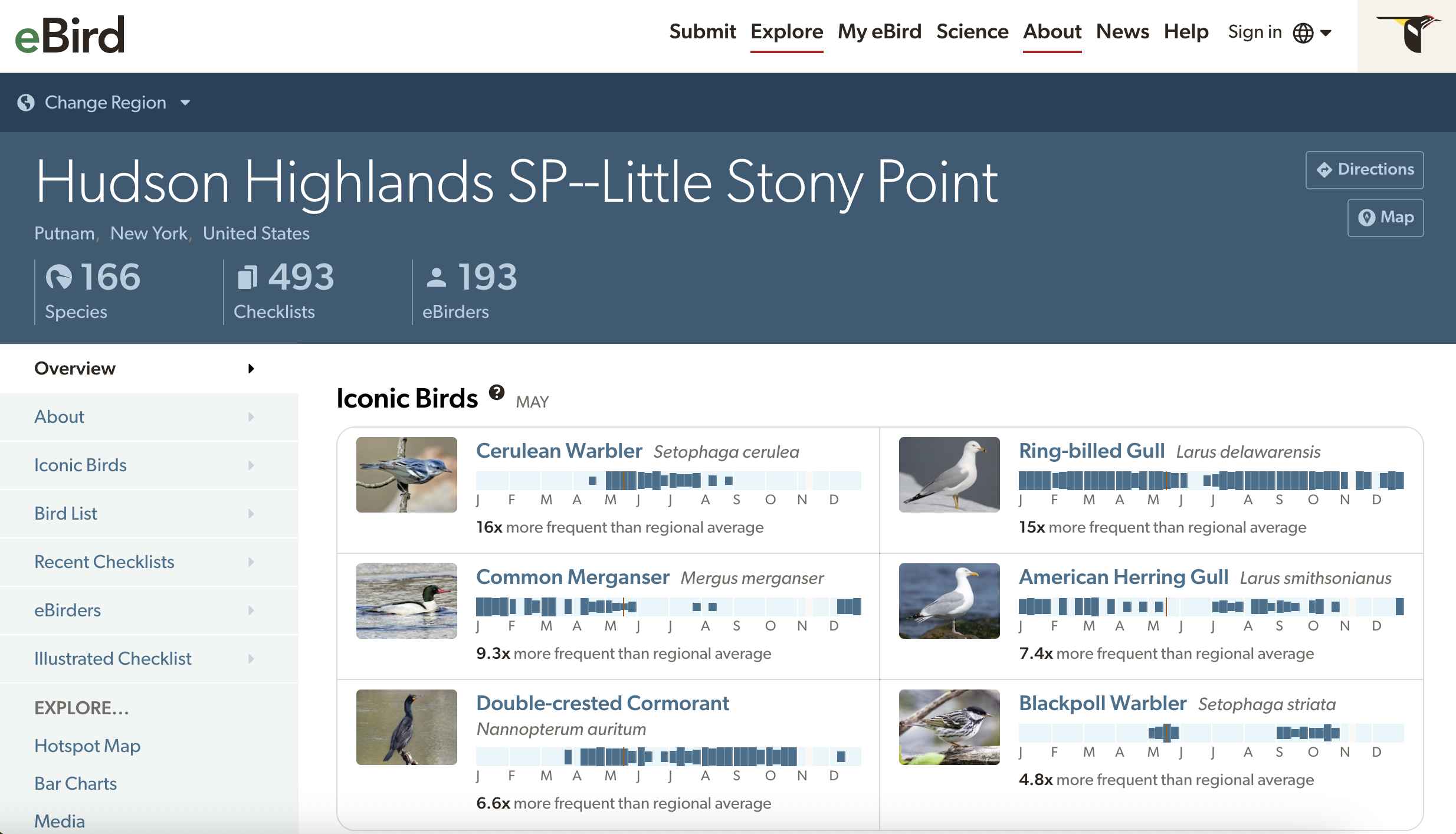
Do some homework. There is an amazing online resource called eBird (also by Cornell Lab of Ornithology, like the Merlin app), where bird nerds of the world share their observations. Let's say you plan on visiting Little Stoney Point in Cold Spring NY, you can check out the location on eBird and see what observations others have made in the area. Now you know ahead of time some of the birds to watch out for.
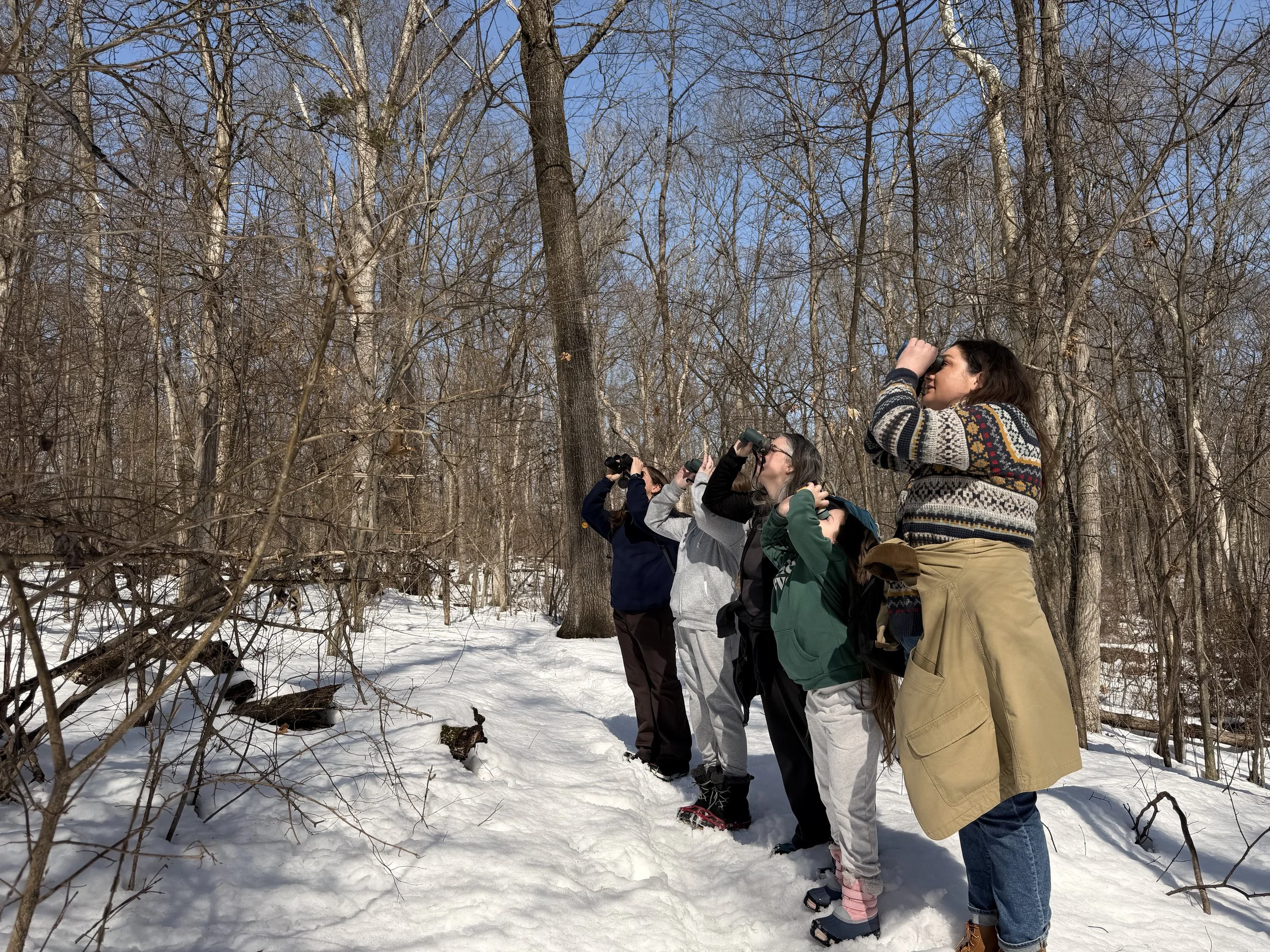
Find a birding group! This is the fastest way to get started in birding. With a group, you can go out with an experienced guide and meet other local birders. Another Summit runs quarterly guided birding walks where we provide ID books, binoculars, and a guide's expertise. We hope you’ll join us soon!
Bird’s the Word: Birdwatching Terms
We consulted The Audubon Dictionary For Birders to share a few terms that you might find in birding forums — or want to casually work in to conversation when you’re ready to start strutting your stuff.
Spark bird:the species that starts your passion for birding (remember Henri’s?)
Lifer: the first-time sighting for a birder (add it to your “Life List”)
Nemesis bird: the species you can never manage to see. (*shakes fist at cloud*)
Dipped: when you miss out on a sighting
Pioneer / Vagrant: a bird outside of their environment (check out the New York Rare Bird Alert to see who’s been sneaking into the state)
Siesta time: afternoon, when birds are resting (so you might as well, too)
Twitcher: the birders who will do almost anything to see species from their list
Hudson Valley Birding: Name that New York Bird
As we mentioned before, birding can be done anywhere. That said, if you want to increase your chances of finding birds, there are a few things you’ll want to consider. Birds are animals (not drones), so like all other animals they need three things to survive: food, shelter, and water. All three of those criteria combine to create habitat. If you are looking for a place to bird with no target species in mind, try to pick a place that you think will fulfill one or two of these requirements.
One local trail that we often use for our birding walks is the Stony Kill Farm Sierra Trail because it contains deciduous forest with several stands of evergreens, a meadow, pond, wetland, and several streams. With multiple unique habitats on one trail, we know we are likely to see a diverse population of birds.
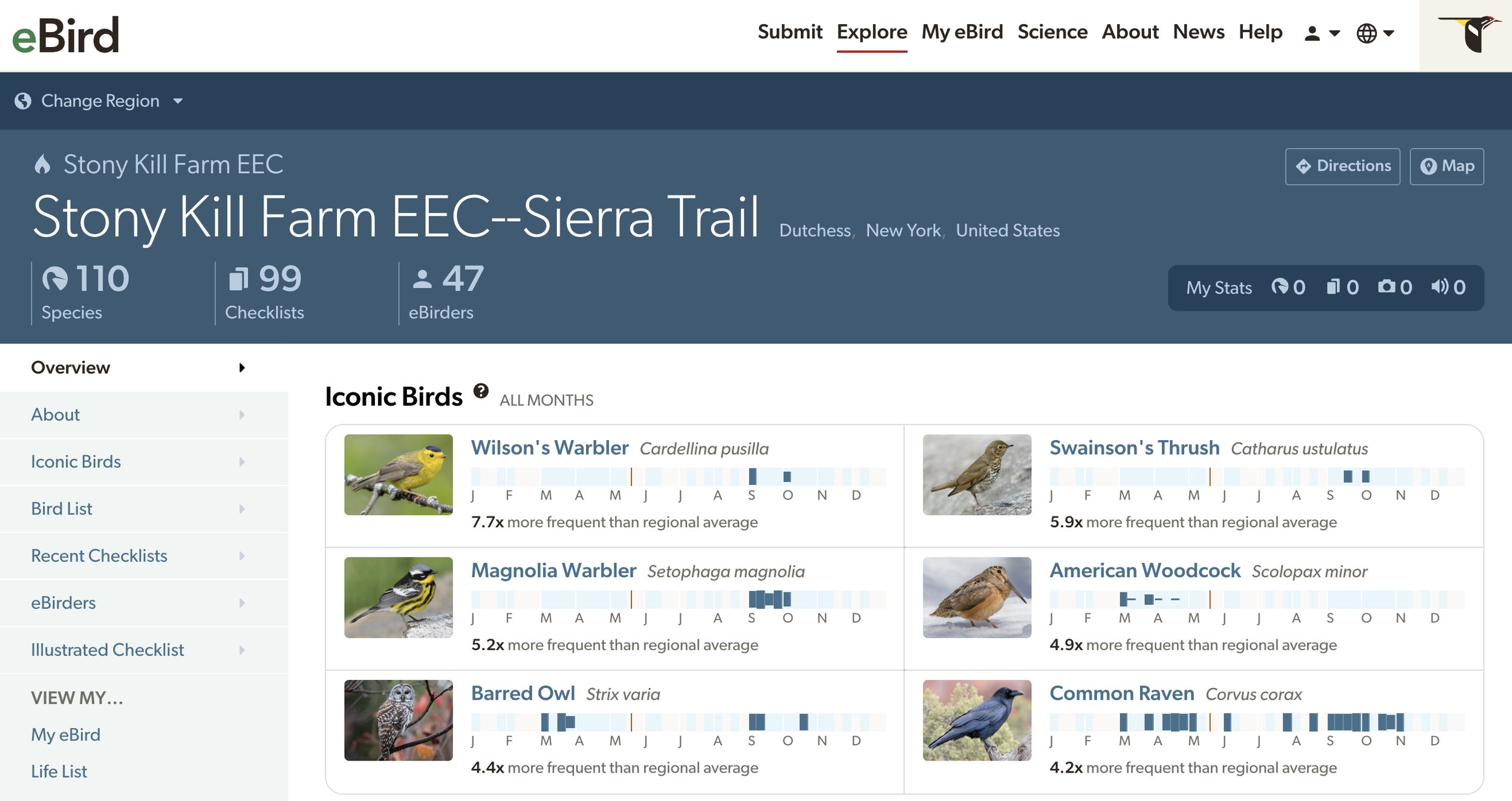
eBird’s page for Stony Kill Farm EEC--Sierra Trail
We commonly see Downy, Hairy, Red-bellied, and Pileated Woodpeckers, Black-capped Chickadees, Carolina Wrens, Tufted Titmice, American Robins, Northern Cardinals, Cooper’s Hawks, Red-winged Blackbirds, Mallards (ducks), and have even spotted a Bald Eagle soaring overhead!
Once again, eBird is a great resource not only for finding specific birds but also for figuring out where to bird. Chances are, if you see a location on eBird that’s near you and has a bunch of recorded sightings, it is a good place to explore.
We’ve also made a fun little “Birding Bingo” sheet for some of the most common birds we find in our area here. Download and print a copy to play on your own:
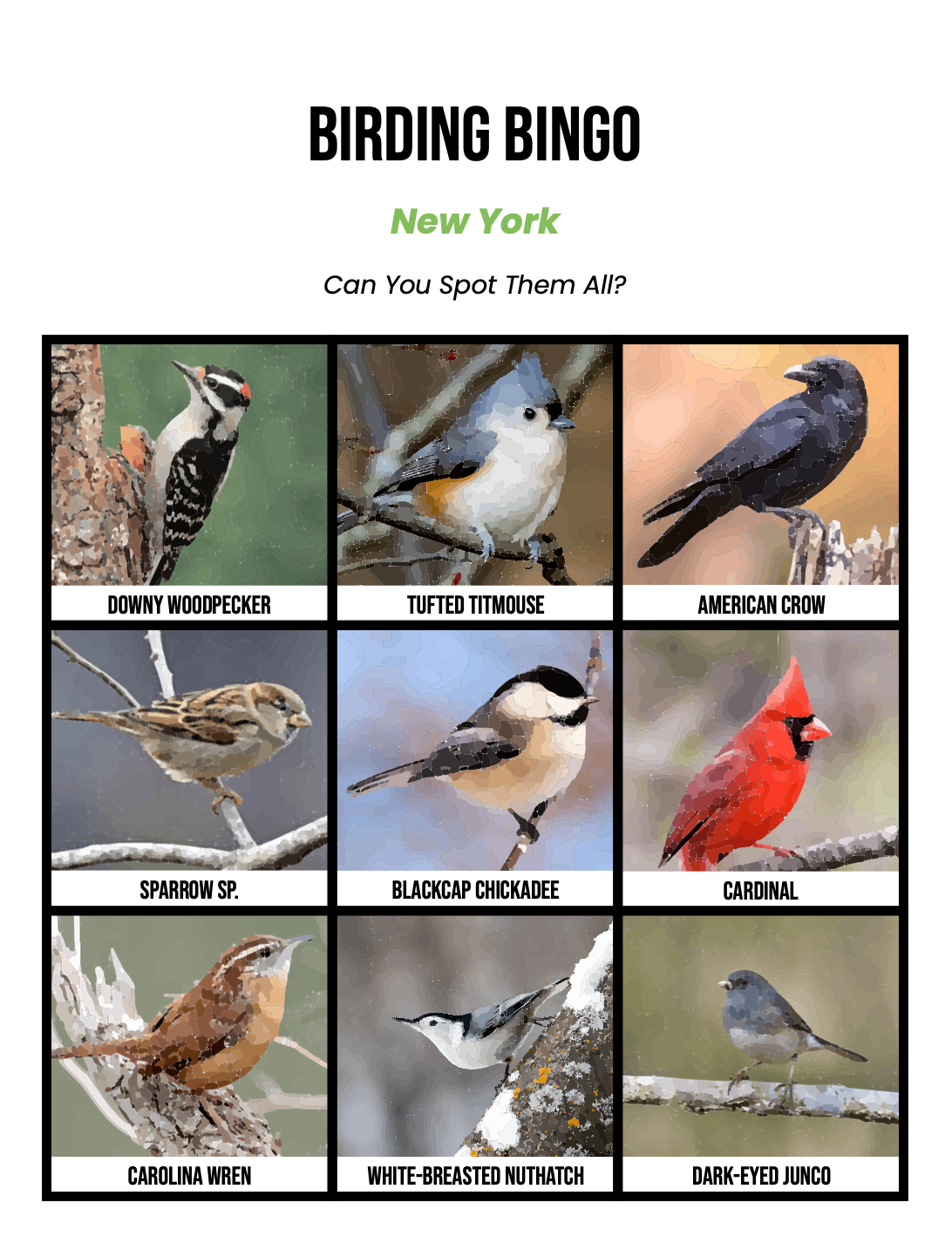
Benefits of Birding
Here’s why birding is good for your mental health — the habits you practice in birding also support improved mental well-being:
Mindfulness: You’re focused on what you see and hear in the moment
Time outdoors: Fresh air, light, and movement all support mood and energy
Low pressure: There’s no “right way” to do it
It’s a simple, accessible way to step out of your routine and reconnect with your environment.
With these tips, you are ready to embark into the world of birding. If you are interested in birding further afield, check out our article on the 10 essential items to take hiking and don't forget to check out our upcoming birding walks & other adventures!